
After a pedestrian accident near an Orange County beach, get medical care, report the crash, collect evidence, and avoid giving recorded statements before you understand your rights. Summer beach traffic in places such as Huntington Beach, Newport Beach, Laguna Beach, and Seal Beach can create crowded crosswalks, busy parking lots, rideshare pickup zones, and distracted driving risks. California law may allow an injured pedestrian to seek compensation when a driver, property owner, rideshare driver, public entity, or another party caused the crash. Timothy J. Ryan helps injured pedestrians understand their options, deal with insurance companies, and pursue compensation when negligence causes harm.



What to Do First After a Beach Area Pedestrian Accident 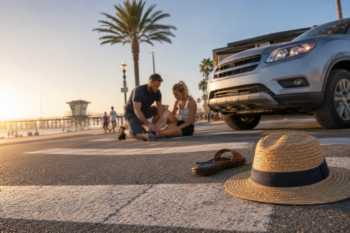
A pedestrian accident can leave you shaken, hurt, and unsure about what matters most. Near Orange County beaches, the scene may also be crowded with summer visitors, cyclists, e-bikes, rideshare vehicles, delivery drivers, and families crossing from parking lots to the sand.
Your first priority is safety and medical care.
If you can, move out of active traffic. Call 911 if anyone is hurt, if the driver leaves, if traffic is blocked, or if there is a dispute about what happened. Even when the injury seems minor, ask for medical help or visit an emergency room, urgent care center, or your doctor as soon as possible. Some injuries, including concussions, internal injuries, back injuries, and soft tissue damage, may not feel severe right away.
A medical record also connects your injuries to the crash. Insurance companies often question delays in treatment. Getting checked promptly protects your health and helps document the claim.
Founding Attorney
Timothy J. Ryan
Report the Accident and Get a Police Report
After a pedestrian accident near the beach, a police report can become one of the most useful records in your case. Officers may document the location, driver information, witness names, weather, traffic controls, lane markings, crosswalks, and statements from people involved.
Beach areas can be confusing because crashes may happen near:
- Marked or unmarked crosswalks
- Beach parking lots and garages
- Hotel, restaurant, or shopping center entrances
- Rideshare pickup and drop-off zones
- Boardwalks, bike paths, and beach access streets
- Festival, pier, or event traffic routes
If the police do not come to the scene, you may still be able to report the incident to the appropriate law enforcement agency. Keep the report number and request a copy when it becomes available.
For accidents involving drivers who flee the scene, review helpful information about a https://www.tjryanlaw.com/car-accidents/what-you-should-know-about-hit-and-run-accident-injury-claim/ if the crash involved a hit-and-run driver.
Got a really bad head concussion and Timothy J. Ryan was amazing.” Tim helped me to stop stressing out about my case and focus my attention back on my work and family. Tim is one of the smartest men I have ever met. This personal injury law firm changed my life. They did not disappoint in any way. The entire office was professional and friendly! You can trust this firm. Highly recommend. ” - Flex Drill Tim is personable, knowledgeable in law and interested in you as a person, Tim stayed on top of my case and kept me updated frequently. His staff (Sose and Katelyn were outstanding and worked closely with me to get things done. I would recommend this law firm." - Leslie Bartimore Very efficient and professional personnel. Starting from the top to bottom. The experience was great. Being Hispanic was really happy seen how they were able to handle cases with all different ethnicities. The treatment I got from Tim and the legal assistant was beyond awesome. Super happy with the settlement and the outputs of my case. Thanks a lot Tim and Tania." - Rafael Sarabia
Gather Evidence Before the Scene Changes
Beach accident scenes change quickly. A rideshare vehicle may leave, a delivery driver may continue a route, witnesses may walk away, and traffic may return to normal within minutes. If you are able, or if someone with you can help, gather evidence before it disappears.
Helpful evidence may include:
- Photos of the vehicle, license plate, and driver information
- Photos of the crosswalk, traffic lights, stop signs, bike lanes, and road markings
- Photos of your injuries, torn clothing, damaged shoes, bags, phone, or stroller
- Names and phone numbers of witnesses
- The exact location, including nearby businesses, beach access points, or intersections
- Screenshots of rideshare trips, delivery records, or parking receipts
- Any nearby cameras from businesses, hotels, city facilities, homes, or parking structures
Do not place yourself in danger to collect evidence. Your health comes first. If you cannot take photos, write down what you remember as soon as possible. Include the direction you were walking, the direction the vehicle was traveling, whether the driver turned, and whether anything blocked visibility.
Understand California Pedestrian Right-of-Way Rules
California pedestrian accident cases often turn on the conduct of both the driver and the pedestrian. Drivers must use reasonable care, watch for people on foot, obey speed limits, yield when required, and avoid unsafe turns. Pedestrians must also use reasonable care for their own safety.
California law protects pedestrians in marked and unmarked crosswalks at intersections, but each case depends on the facts. A driver may be responsible for failing to yield, speeding, texting, making an unsafe turn, driving under the influence, or ignoring beach traffic conditions. A pedestrian may still have a claim even when the insurance company argues that the pedestrian was partly at fault.
California follows comparative negligence. This means compensation may be reduced by a person’s percentage of fault, but partial fault does not automatically prevent recovery. For example, if an insurer claims a pedestrian crossed outside a marked crosswalk, that does not end the analysis. The driver’s speed, attention, visibility, and reaction time may still matter.
For a broader overview of legal issues involving pedestrians, see this resource on https://www.tjryanlaw.com/pedestrian-accidents/the-nitty-gritty-of-your-pedestrian-accident-case.
Case Results
Common Summer Beach Pedestrian Accident Scenarios
Orange County beach communities see heavier pedestrian activity during summer. Drivers may be looking for parking, watching navigation apps, turning into crowded lots, or trying to leave a busy event. Pedestrians may be crossing with towels, coolers, surfboards, umbrellas, children, or beach gear.
Common scenarios include:
A driver turns right near a pier and fails to see a pedestrian in the crosswalk.
A tourist backing out of a beach parking space strikes someone walking behind the vehicle.
A rideshare driver stops in an unsafe area and another vehicle hits a pedestrian entering or leaving the car.
A delivery driver looks at a phone while approaching a crowded coastal intersection.
A speeding driver fails to slow near a beach event, restaurant district, or hotel entrance.
An e-bike or bicycle conflict leads to a pedestrian being knocked into traffic or onto pavement.
These facts matter because liability may involve more than one person or company. A driver, employer, rideshare company, vehicle owner, property owner, event organizer, or public entity may need to be investigated.
When More Than One Party May Be Responsible
Pedestrian accident claims are not always limited to the driver. Depending on where and how the accident happened, other parties may share responsibility.
A property owner may be involved if poor lighting, unsafe parking lot design, broken pavement, blocked sightlines, or missing signs contributed to the injury. A business may have relevant surveillance video. A public entity may be involved if a dangerous road condition, traffic signal issue, or poorly maintained public property played a role. Claims against government entities often have shorter deadlines, so prompt legal review is critical.
Beach areas can also create rideshare and delivery issues. If the driver was working at the time of the crash, available insurance may depend on app status, the purpose of the trip, and the company’s policy structure. If an accident involved an Uber, Lyft, or similar service, this page on https://www.tjryanlaw.com/rideshare-accident/understanding-liability-in-a-california-rideshare-accident/ may help explain how liability can work.
What Compensation May Cover After a Pedestrian Injury
A pedestrian has little protection against a vehicle. Even a low-speed impact can cause serious injuries, especially when the person falls onto pavement or is struck by the hood, mirror, bumper, or side of a car.
A California pedestrian accident claim may seek compensation for:
- Emergency treatment and ambulance bills
- Hospital care, surgery, imaging, and specialist visits
- Physical therapy and future medical care
- Lost wages and reduced earning ability
- Pain, physical limitations, and emotional distress
- Scarring, disfigurement, or permanent disability
- Mobility aids, home care, or transportation needs
- Damaged personal property
- Wrongful death damages when a fatal injury occurs
Insurance companies may focus on fast settlement offers before the full medical picture is known. Be careful with any offer that arrives before you know whether you need follow-up care, imaging, therapy, or time away from work. A settlement usually requires a release of claims, which may prevent you from seeking more compensation later.
For general personal injury settlement issues, read more about the https://www.tjryanlaw.com/personal-injury/best-possible-injury-settlement/.
Avoid Common Mistakes After the Accident
After a beach pedestrian accident, small decisions can affect your claim. You do not need to know the law before protecting yourself. A few practical steps can help.
Avoid these mistakes:
- Do not admit fault at the scene.
- Do not say you are fine if you are hurt or unsure.
- Do not delay medical care.
- Do not give a recorded statement without legal guidance.
- Do not post about the accident or your injuries on social media.
- Do not accept a quick settlement before understanding your medical needs.
- Do not assume the driver’s insurance company is looking out for you.
Insurance adjusters may sound friendly, but their role is to evaluate and limit the company’s financial exposure. They may ask questions designed to minimize the injury, shift blame, or argue that the accident was caused by beach crowds rather than driver negligence.
How an Attorney Can Help With a Pedestrian Accident Claim
A pedestrian accident attorney can protect the claim while you focus on healing. This may include investigating the scene, requesting camera footage, contacting witnesses, reviewing traffic controls, collecting medical records, documenting lost income, identifying insurance coverage, and handling communications with insurers.
Legal help is especially useful when:
- The driver denies fault.
- You were hit in or near a crosswalk.
- The crash happened in a parking lot or rideshare zone.
- A public entity may be involved.
- The driver was uninsured or underinsured.
- The injuries are serious or long lasting.
- The insurer wants a recorded statement.
- The settlement offer seems too low.
If the crash involved a car, truck, rideshare vehicle, motorcycle, or another motor vehicle, you may also find this resource on a https://www.tjryanlaw.com/car-accidents/how-to-choose-the-right-car-accident-lawyer-in-california/ helpful when deciding what kind of legal support to seek.
Deadlines Matter in California Pedestrian Accident Cases
California personal injury claims are controlled by deadlines. Many injury cases must be filed within two years, but shorter deadlines may apply when a government entity is involved. A beach-area crash can involve city streets, county roads, public parking lots, crosswalks, or public property. That makes early review especially useful.
Waiting can also make evidence harder to find. Security footage may be erased. Witnesses may become difficult to contact. Vehicles may be repaired. Road conditions may change. Prompt action gives your attorney a better chance to preserve the facts.
Speak With a California Pedestrian Accident Attorney
If you were injured while walking near an Orange County beach this summer, you do not have to handle the claim alone. Timothy J. Ryan offers guidance for injured pedestrians and families who need help understanding medical bills, insurance issues, lost income, and the legal process. Contact the firm for a free consultation and learn what options may be available under California law.
This article is for informational purposes only and is not legal advice. Consult an attorney about your specific situation.