
Summer construction zones can make California car accident claims harder because several factors may overlap at once. Driver negligence, lane shifts, temporary signs, contractor work, public agency decisions, and insurance disputes can all affect what happens after a crash.
A road work accident in Orange County may involve more than one responsible party. Some claims may also have shorter notice deadlines if a government entity is involved. Medical records, scene photos, witness information, and project records can become key evidence.
This guide explains why construction zone injury claims get complicated and how injured drivers and passengers can protect their rights after a California crash.



Why Summer Construction Zones Create More Risk 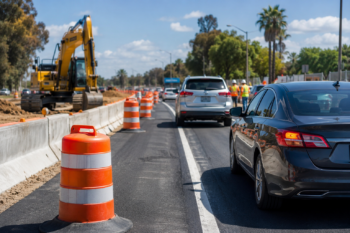
Summer often brings more road work across California, including paving, lane repairs, bridge work, utility projects, and roadway improvements. In Orange County, drivers may see construction near freeway ramps, coastal routes, commercial streets, and residential corridors where traffic patterns change quickly.
A normal commute can become confusing when lanes narrow, cones redirect traffic, speed limits drop, or crews work near moving vehicles. Even careful drivers may have less room to react. One driver may drift into a closed lane after looking away. Another may brake hard after seeing a flagger, barrier, or work truck.
Construction zones do not excuse careless driving. California drivers still must use reasonable care, follow posted warnings, obey traffic controls, and adjust their speed for road conditions. When a driver fails to do that and someone gets hurt, a car accident claim may follow.
Common Causes of Construction Zone Car Accidents
Construction zone crashes often involve the same driver behavior seen in other traffic collisions, but the work zone can make the results worse.
Common causes include:
- Speeding through a reduced-speed work area
- Following too closely when traffic suddenly slows
- Distracted driving near cones, crews, or lane shifts
- Unsafe lane changes in narrowed lanes
- Failure to yield to work trucks or merging traffic
- Impaired or fatigued driving
- Confusion caused by temporary signs, barriers, or pavement markings
Some crashes also raise questions about whether the work zone itself was reasonably safe. For example, an injured person may claim that cones were placed too close to traffic, warning signs were missing, temporary lane lines were unclear, or equipment blocked visibility. Those issues may add other parties to the claim.
For a broader look at driver behavior and crash patterns, this discussion of common causes of car accidents on California roads may help:
https://www.tjryanlaw.com/car-accidents/common-causes-of-car-accidents-on-california-roads/
Founding Attorney
Timothy J. Ryan
Who Can Be Liable for a Construction Zone Crash?
A basic rear-end collision may involve two drivers and two insurance companies. A construction zone accident can involve a longer list.
Potential parties may include:
- A speeding driver
- A distracted driver
- A commercial driver
- A road construction contractor
- A subcontractor responsible for traffic control
- A public agency responsible for the road
- A vehicle owner
- A manufacturer, if defective equipment or vehicle parts contributed to the crash
California injury claims are often built around negligence. That means the injured person usually needs to show that someone failed to use reasonable care and caused harm. In a construction zone, the key questions may include who created the danger, who had control over it, who knew or should have known about it, and what could have been done to prevent the crash.
This is why early investigation matters. The scene can change within hours. Cones may be moved. Temporary signs may be removed. Lane closures may shift overnight. Work logs, traffic control plans, dash camera footage, and contractor records may not be available for long.
Got a really bad head concussion and Timothy J. Ryan was amazing.” Tim helped me to stop stressing out about my case and focus my attention back on my work and family. Tim is one of the smartest men I have ever met. This personal injury law firm changed my life. They did not disappoint in any way. The entire office was professional and friendly! You can trust this firm. Highly recommend. ” - Flex Drill Tim is personable, knowledgeable in law and interested in you as a person, Tim stayed on top of my case and kept me updated frequently. His staff (Sose and Katelyn were outstanding and worked closely with me to get things done. I would recommend this law firm." - Leslie Bartimore Very efficient and professional personnel. Starting from the top to bottom. The experience was great. Being Hispanic was really happy seen how they were able to handle cases with all different ethnicities. The treatment I got from Tim and the legal assistant was beyond awesome. Super happy with the settlement and the outputs of my case. Thanks a lot Tim and Tania." - Rafael Sarabia
The Role of California Comparative Fault
Construction zone claims can become harder when insurers argue that more than one person shares blame. California uses comparative fault, which means an injured person’s compensation can be reduced by their percentage of responsibility.
For example, imagine a driver is hit by another motorist who made an unsafe lane change in a road work area. The insurance company may still argue that the injured driver was traveling too fast for the narrowed lane or did not brake soon enough. The injured driver may disagree, but the claim may turn on evidence such as vehicle damage, witness statements, event data, medical records, and scene photos.
Comparative fault can also apply among defendants. A driver may blame the contractor. A contractor may blame the public agency. A public agency may argue that the driver ignored warnings. These disputes can delay settlement because each side may try to reduce its own financial responsibility.
For more information on how fault works in injury cases, see this guide to the role of negligence in California personal injury cases:
Do Government Claim Deadlines Apply?
Some construction zone crashes involve city, county, or state road projects. If a public agency may be responsible for a dangerous road condition, missing warning, poor traffic control plan, or negligent public employee conduct, special rules may apply.
In many California cases involving a government entity, an injured person must present an administrative claim before filing a lawsuit. These deadlines can be much shorter than the standard personal injury statute of limitations. Missing a required government claim deadline can affect the ability to seek compensation.
Not every construction zone crash involves a government claim. A private contractor, negligent driver, or commercial company may be the main target. Because road work often involves public contracts or public property, injured people should identify all potentially responsible parties early.
What Evidence Helps After a Work Zone Accident?
Construction zone accident claims often depend on evidence that shows what the scene looked like at the time of the crash.
Helpful evidence may include:
- Photos and videos of the vehicles, cones, signs, lane markings, barriers, and road surface
- Police or collision reports
- Names and contact information for witnesses
- Medical records linking injuries to the crash
- Vehicle repair estimates and photographs
- Dash camera, traffic camera, or nearby business camera footage
- Work zone traffic control plans
- Contractor daily logs and inspection records
Injured people should seek medical care promptly, even when symptoms seem manageable at first. Neck injuries, back injuries, concussions, shoulder injuries, and soft tissue injuries may worsen after the adrenaline of the crash fades. Delayed care can also give insurers an argument that the injuries were not related to the collision.
This resource on deciding between emergency room and urgent care after a crash may help injured people think through next steps after a California collision:
https://www.tjryanlaw.com/car-accidents/emergency-room-or-urgent-care/
Insurance Issues After a Work Zone Crash
Insurance companies may take extra time to evaluate construction zone claims because they may need to determine which policy applies. If a commercial vehicle, contractor, subcontractor, or public agency is involved, multiple insurers may review the same crash from different angles.
The injured person may face questions such as:
- Was the at-fault driver working at the time?
- Does a contractor’s insurance policy apply?
- Did a public agency retain control over the work zone?
- Can uninsured or underinsured motorist coverage help?
- Did more than one insurance policy cover the crash?
Uninsured and underinsured motorist coverage can matter when the at-fault driver has no insurance or not enough insurance to cover the harm caused. More information about this coverage is available here:
https://www.tjryanlaw.com/car-accidents/uninsured-and-underinsured-motorist-coverage-california/
How Damages Are Evaluated
A construction zone crash may lead to financial, physical, and emotional losses. Depending on the facts, recoverable damages may include medical bills, future treatment costs, lost income, reduced earning capacity, vehicle damage, pain, suffering, and loss of normal daily activities.
The value of a claim depends on the evidence, injury severity, available insurance, fault disputes, and how the injuries affect the person’s life. A person with a short course of treatment will usually have a different claim than someone who needs surgery, ongoing therapy, or long-term work restrictions.
For a deeper discussion of claim valuation, this article on California personal injury settlement expectations may be useful:
A Brief Example
Consider a Huntington Beach driver who enters a summer road work area on a busy afternoon. A temporary lane shift sends traffic left. A pickup truck behind the driver follows too closely and rear-ends the vehicle when traffic slows near a work truck. The pickup driver says the lane shift was poorly marked. The contractor says the signs were placed correctly. The injured driver has neck pain, misses work, and needs physical therapy.
That claim may involve the pickup driver’s conduct, the layout of the work zone, the timing of sign placement, medical records, and insurance coverage. Investigation can help separate proof from speculation.
What Should You Do After a Construction Zone Crash?
After any crash, safety comes first. Move out of traffic if possible, call 911 when anyone is hurt, and follow medical advice. When it is safe, take photos of the full scene, not just the vehicles. Capture cones, signs, barriers, lane markings, construction equipment, lighting, skid marks, and anything that blocked visibility.
Drivers and passengers should avoid arguing about fault at the scene. They should also be cautious with recorded insurance statements before they understand the full extent of their injuries and the parties involved.
Call a California Car Accident Attorney
A summer construction zone crash can leave you dealing with pain, medical appointments, repair bills, lost wages, and confusing insurance calls. Timothy J. Ryan helps injured Californians understand their options after serious car accidents.
If you were hurt in a construction zone crash in Orange County or elsewhere in California, call Timothy J. Ryan at (714) 881-8848 to discuss your situation and the next steps that may protect your claim.
This article is for informational purposes only and is not legal advice. Consult an attorney about your specific situation.